
When metal parts need to be joined, the wrong adhesive can lead to weak bonds, rust, or premature failure. Choosing the best glue to bond metal to metal is essential for everything from DIY repairs to industrial fabrication. In this guide, we explore the top adhesives, explain how they work, and give you a side‑by‑side comparison to help you pick the right one for your project.
We’ll cover everything from epoxy resins to cyanoacrylates, look at key performance metrics, and share pro tips to ensure a flawless bond. Whether you’re a hobbyist or a professional technician, this article gives you the knowledge you need to achieve the strongest metal‑to‑metal joints.
Why Traditional Glues Fail on Metal Surfaces
Metal surfaces are often smooth, inert, and low in surface energy, which makes adhesion challenging. Conventional white glue or household super‑glue usually lacks the chemical compatibility or mechanical strength required for metal. Poor contact can create voids that compromise structural integrity and allow moisture to penetrate, accelerating corrosion.
Understanding these challenges explains why specialized adhesives, such as two‑part epoxies and structural cyanoacrylates, are the industry standard for metal bonding.
Epoxy Resin: The Gold Standard for Metal Bonding
Epoxy resin is widely regarded as the most reliable glue for metal to metal bonding. It offers high shear strength, excellent chemical resistance, and can cure at room temperature or under heat.
Types of Epoxy Resins
There are mainly two categories:
- Two‑part epoxy systems: Mix resin and hardener in a precise ratio. These provide the highest strength and durability.
- Ready‑to‑use epoxies: Pre‑mixed for quick application, ideal for small repairs.
Key Benefits
Epoxies bond strongly to metal, resist moisture, and can fill gaps. They also maintain flexibility, reducing the risk of cracking under vibration or temperature changes.
Application Tips
Before applying, clean the metal with isopropyl alcohol. Roughen the surface lightly with fine grit sandpaper to increase surface area. Mix the components thoroughly for at least 30 seconds. Apply evenly and clamp the joint until the initial cure.
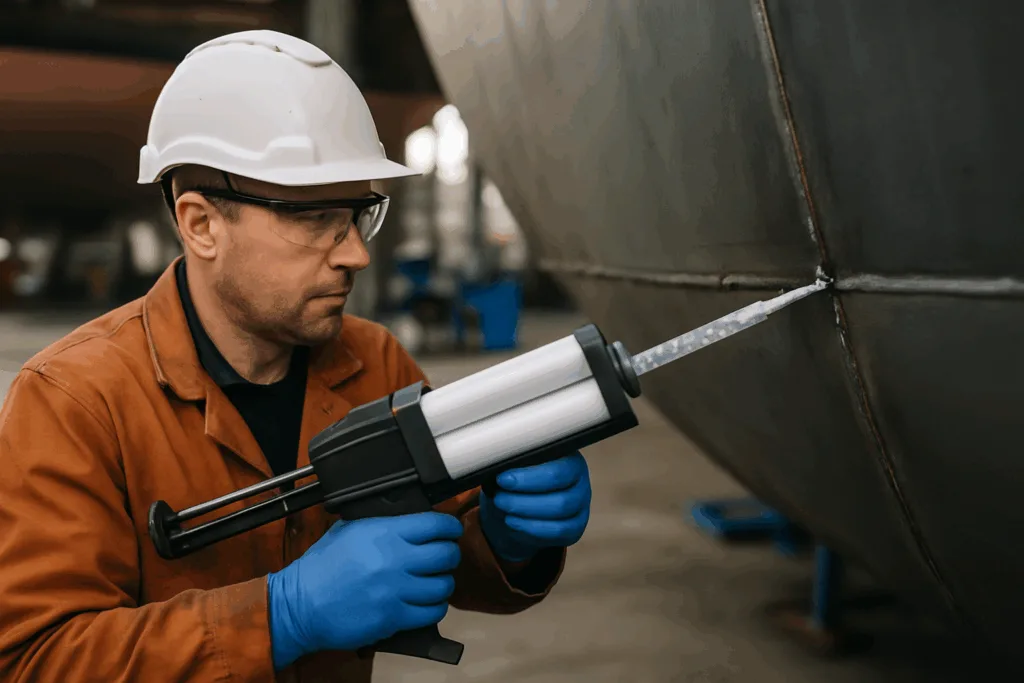
Cyanate Ester Adhesives for High‑Temperature Environments
Cyanate ester glues excel where high temperature or electrical insulation is required. They are commonly used in aerospace and automotive applications.
Performance Highlights
These adhesives maintain strength up to 250°C and have excellent resistance to chemical corrosion.
When to Choose Cyanate Ester
If your metal parts will face high heat or electrical load, cyanate ester can outperform standard epoxies.
Installation Considerations
Prepare the surface with a solvent such as acetone. Apply thin layers to avoid excessive shrinkage. Cure at the recommended temperature, usually between 120°C and 180°C.
Cyanoacrylate (Super Glue) for Quick Fixes
Cyanoacrylates are popular for their instant bond and easy handling. They are suitable for small, low‑stress repairs.
Types of Cyanoacrylate
- Standard 2‑minute cyanoacrylate: Ideal for quick fixes.
- High‑strength variants: Offer better load resistance.
Limitations
Cyanoacrylates are brittle and can fail under impact or vibration. They also don’t perform well in high‑humidity environments.
Optimal Use Cases
Use for cosmetic repairs, small metal fittings, or where bonding time is critical.
Polyurethane Adhesives for Flexible Metal Bonds
Polyurethane glues provide a flexible, rubber‑like bond, useful in applications where metal parts must accommodate slight movements.
Advantages
These adhesives absorb shock, resist impact, and maintain bond integrity under temperature cycling.
Application Tips
Clean the metal surface thoroughly. Apply a thin coat, use a small roller to spread evenly, and allow a full cure before applying pressure.
Comparison Table: Which Glue Wins for Your Metal Bonding Needs?
| Adhesive Type | Strength (MPa) | Temperature Range (°C) | Best Use | Ease of Application |
|---|---|---|---|---|
| Two‑part Epoxy | 50–70 | -40 to 120 | Structural joints, heavy loads | Moderate |
| Cyanate Ester | 45–60 | -40 to 250 | High‑temp, electrical insulation | Moderate |
| Standard Cyanoacrylate | 10–20 | -10 to 80 | Quick repairs, small parts | Easy |
| Polyurethane | 20–35 | -30 to 110 | Flexible joints, vibration resistance | Easy |
Pro Tips from Adhesive Experts
- Always clean metal with alcohol; remove oils and contaminants.
- Use a sanding block to create micro‑roughness for better mechanical interlocking.
- Mix epoxy in small batches to avoid waste and ensure consistency.
- Clamp joints firmly during curing; even pressure distributes the adhesive evenly.
- Store adhesives in a cool, dry place to maintain potency.
- For outdoor projects, choose adhesives with UV and weather resistance.
- Preheat metal parts slightly (30–60°C) to improve flow in some epoxies.
- Test a small sample before full application to confirm bond quality.
Frequently Asked Questions about best glue to bond metal to metal
What is the best glue for bonding steel to steel?
Two‑part epoxy or cyanate ester adhesives are typically the strongest options for steel‑to‑steel bonds due to their high shear strength and chemical resistance.
Can I use regular super glue to bond metal parts?
Super glue can work for small, low‑stress repairs, but it is brittle and may fail under vibration or temperature changes.
Do I need to sand metal before applying epoxy?
Sanding improves surface roughness, which enhances mechanical interlocking and overall bond strength.
How long does epoxy take to cure fully?
Initial set occurs in minutes, but full cure can take 24–48 hours depending on temperature and humidity.
Is it safe to use epoxy on food‑contact metal surfaces?
Only food‑grade epoxies are approved for such applications. Verify the product’s certifications before use.
Can I bond aluminum to stainless steel with the same glue?
Yes, two‑part epoxies and cyanate ester adhesives bond well to both materials, but surface preparation is critical.
What temperature range can cyanoacrylate handle?
Typically up to 80°C; beyond that, the adhesive may soften or degrade.
How do I remove epoxy once it’s cured?
Use a solvent like acetone or a specialized epoxy remover, and physically scrape off with a plastic scraper.
Conclusion
Choosing the right adhesive for metal‑to‑metal bonding requires understanding both the material properties and the application demands. Two‑part epoxy remains the go‑to choice for most structural joins, while cyanate ester and polyurethane offer specialized solutions for high‑temperature and flexible needs. Following the preparation and application tips above ensures a durable, reliable bond that stands the test of time.
Ready to tackle your next metal bonding project? Grab the right adhesive, prep your surfaces properly, and achieve a bond that lasts. If you have more questions or need product recommendations, feel free to reach out or explore our comprehensive adhesive guide for deeper insights.

