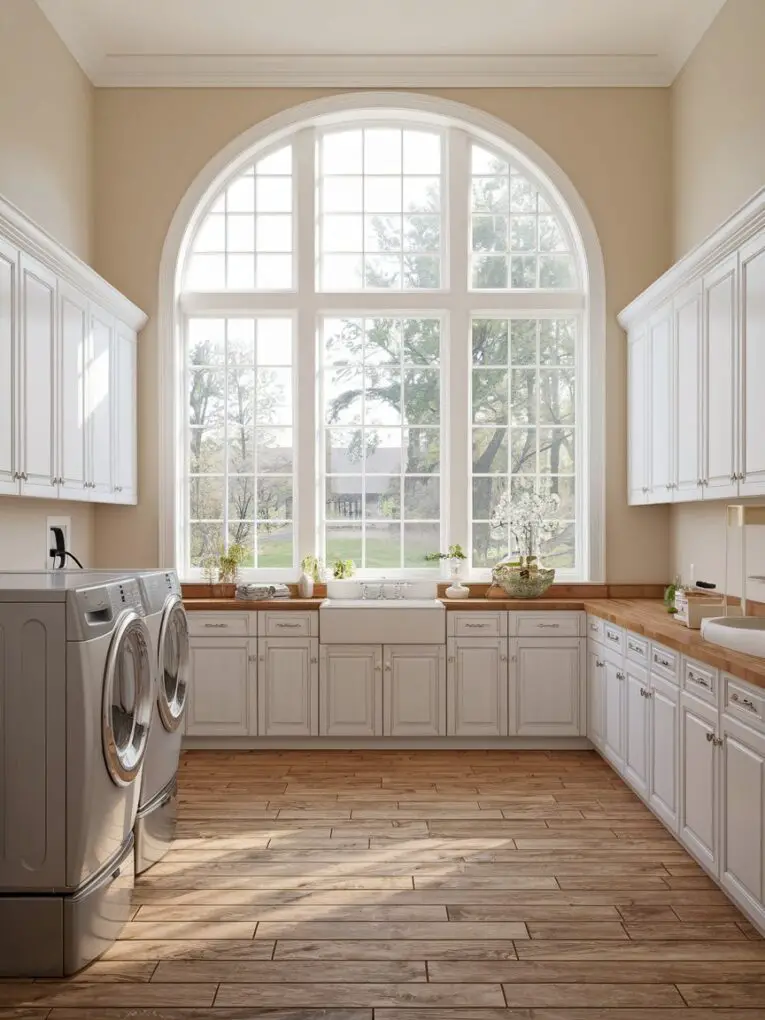
Choosing the right floor for your laundry room can feel like a daunting task. Yet, the right surface can transform a utilitarian space into a clean, efficient, and even stylish area. In this guide, we dive into the best flooring for laundry rooms, covering materials, maintenance, cost, and durability. By the end, you’ll know exactly which option fits your needs.
Our focus is on the most practical choices for washers, dryers, and spilled detergent. We’ll also explore how color, texture, and installation affect the overall look and feel of your laundry space. Let’s make this often overlooked room the best it can be.
Why Flooring Choice Matters in a Laundry Room
A laundry room sees rough traffic, high moisture, and frequent cleaning. Flooring that withstands these conditions reduces maintenance and extends its lifespan. Additionally, a well-chosen floor can improve air quality and acoustics, making the area more pleasant to use.
Below we discuss criteria that guide the best flooring for laundry rooms, from water resistance to anti-slip properties. Understanding these factors helps you make an informed decision.
Key Factors to Consider
- Water resistance and mold prevention
- Durability against heavy foot traffic and appliance vibration
- Ease of cleaning and maintenance
- Slip resistance when wet
- Cost and installation requirements
Common Misconceptions
Many homeowners think only expensive options like natural stone are suitable. In reality, affordable materials such as vinyl and porcelain tile can outperform pricier choices in wet environments.
Another myth is that all flooring can be installed in a laundry room. Avoid surfaces that warp or deteriorate when exposed to moisture—wood, for example, needs careful sealing and frequent maintenance.
Top 10 Best Flooring for Laundry Room in 2024
Here are the most popular and reliable flooring options for laundry rooms, ranked by performance and style.
1. Luxury Vinyl Plank (LVP)
LVP offers a wood-like appearance while resisting water, stains, and dents. It’s lightweight and easy to install, making it a favorite for DIY projects.
- Waterproof: Yes, full-density core
- Slip rating: 3.5/5
- Average cost: $3–$8 per square foot
2. Porcelain Tile
Porcelain tile is dense and impervious to moisture, making it ideal for high-traffic laundry areas. Its wide range of colors and textures adds design flexibility.
- Water resistance: Excellent
- Slip rating: 4/5 (textured options)
- Average cost: $5–$12 per square foot
3. Sheet Vinyl
Sheet vinyl is a budget-friendly option that provides a seamless surface, minimizing crumbs and stains. It’s ideal for large spaces.
- Waterproof: Yes
- Slip rating: 3/5
- Average cost: $1.50–$3 per square foot
4. Stone Composite Tile
Stone composite blends natural stone with resin, offering durability with a lighter weight. It’s easy to clean and resists chemical stains.
- Water resistance: Excellent
- Slip rating: 4/5
- Average cost: $6–$10 per square foot
5. Rubber Flooring
Rubber is soft, slip-resistant, and ideal for households with young children or pets. It also cushions vibrations from appliances.
- Water resistance: Excellent
- Slip rating: 4.5/5
- Average cost: $4–$8 per square foot
6. Ceramic Tile
Ceramic tile is affordable and comes in many styles, though it’s slightly less dense than porcelain, making it more prone to cracking if not installed properly.
- Water resistance: Good
- Slip rating: 3.5/5 (glazed)
- Average cost: $2–$8 per square foot
7. Concrete with Sealant
Concrete offers a modern aesthetic and can be sealed for water and stain protection. It’s highly durable and can be polished for a sleek finish.
- Water resistance: Moderate (sealed)
- Slip rating: 3/5
- Average cost: $2–$6 per square foot
8. WPC (Wood-Plastic Composite) Flooring
WPC combines wood fibers with plastic, creating a material that resists moisture and warping while maintaining a natural look.
- Water resistance: High
- Slip rating: 3.5/5
- Average cost: $4–$9 per square foot
9. Cementitious Tile (CCT)
CCT is a composite tile embedded in a cementitious matrix, offering excellent durability and a unique aesthetic.
- Water resistance: Excellent
- Slip rating: 4/5
- Average cost: $8–$12 per square foot
10. Reclaimed Wood Flooring
For eco-conscious homeowners, reclaimed wood adds character. Proper sealing and maintenance keep it safe in a wet environment.
- Water resistance: Moderate (sealed)
- Slip rating: 3/5
- Average cost: $6–$12 per square foot

Comparing Floor Types: Durability, Cost, and Maintenance
| Flooring Type | Water Resistance | Durability (Years) | Maintenance Level | Estimated Cost (per sq ft) |
|---|---|---|---|---|
| Luxury Vinyl Plank | Excellent | 10–15 | Low | $3–$8 |
| Porcelain Tile | Excellent | 15–20 | Low | $5–$12 |
| Sheet Vinyl | Excellent | 8–12 | Low | $1.50–$3 |
| Rubber Flooring | Excellent | 10–15 | Medium | $4–$8 |
| Cementitious Tile | Excellent | 20–25 | Medium | $8–$12 |
Installation Tips for the Best Flooring in Your Laundry Room
Proper installation is critical to maximizing floor performance. Below are actionable steps for each material type.
Luxury Vinyl Plank
- Use a moisture barrier if subfloor isn’t dry.
- Measure twice, cut once to avoid waste.
- Secure hardwood or plywood subfloor with a self‑adhesive underlayment.
Porcelain Tile
- Ensure the subfloor is level and stable.
- Use a high‑strength adhesive and a notched trowel.
- Apply a grout sealant after curing to protect against stains.
Sheet Vinyl
- Slide sheets into place; they adhere without glue.
- Trim edges to fit around cabinets or fixtures.
- Seal seams with vinyl-compatible caulk.
Expert Pro Tips for Long-Lasting Laundry Floor
- Install a drainage channel along one wall to capture accidental spills.
- Use floor mats under the washer and dryer to absorb vibrations.
- Apply a water‑repellent coating on wood or composite floors annually.
- Keep the floor level; uneven surfaces increase wear.
- Schedule a professional cleaning for tile grout every 6 months.
- Always use a rug or floor protector in high-traffic areas.
Frequently Asked Questions about best flooring for laundry room
Can I use hardwood in a laundry room?
Hardwood can be used if fully sealed and maintained, but it’s less moisture‑resistant than vinyl or tile. Consider engineered hardwood with a water‑proof finish for better durability.
Is vinyl flooring safe around children?
Yes. Vinyl is non-toxic, easy to clean, and provides a cushioned surface that reduces injury risk for kids.
How often should I reseal laminate flooring?
Reapply a sealant every 1–2 years, especially in high‑traffic or wet areas, to maintain water resistance.
What’s the best flooring for a small laundry closet?
Sheet vinyl or luxury vinyl planks are ideal because they’re lightweight, easy to cut, and require minimal space for installation.
Can I install flooring over existing carpet?
Only if the carpet is flat and the subfloor is stable. Otherwise, it’s safer to remove the carpet before adding a durable finish.
Will a concrete floor need extra protection?
Yes. Seal the concrete with a penetrating sealer to prevent water absorption and staining.
Which flooring offers the best slip resistance?
Rubber flooring scores highest, followed by textured porcelain tiles and vinyl planks with a matte finish.
Do I need a moisture barrier for tile installation?
In high‑moisture areas, a vapor barrier is essential to prevent mold and subfloor damage.
Is a removable floor better for renters?
Sheet vinyl or luxury vinyl planks can be installed and removed relatively easily, making them renter-friendly options.
How long does a typical laundry room floor last?
With proper maintenance, the best options (porcelain tile, rubber, or luxury vinyl) can last 15–25 years.
Choosing the right flooring for a laundry room blends practicality with style. By considering moisture resistance, durability, and ease of upkeep, you can create a space that stays clean, safe, and attractive for years. Ready to upgrade? Start by selecting the material that best matches your lifestyle, budget, and design vision, and watch your laundry room transform into a standout part of your home.

